This happens often:
- After the exercise
- During warm weather
- After having drunk insufficient fluids for several hours
Drinking water usually makes the urine lighter in color again quite quickly. If the urine remains dark despite sufficient hydration, there may be another cause.
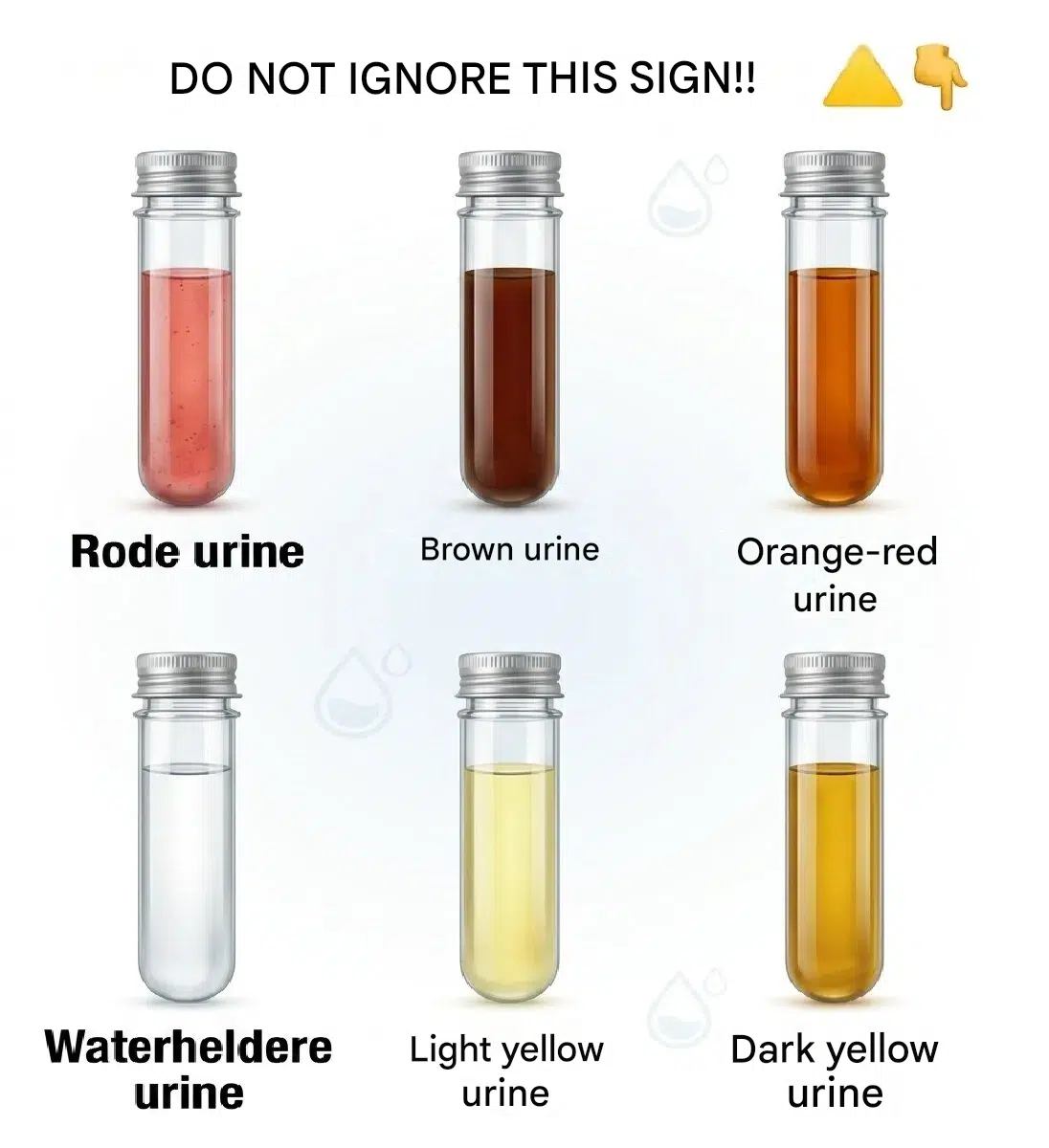
Orange urine
Orange urine can have various causes, including:
- Dehydration
- Certain medicines
- Vitamin supplements (especially B vitamins in high doses)
- Foods containing strong natural or artificial colorings.
Orange urine can sometimes indicate problems with the liver or bile ducts, especially if this is accompanied by a yellow discoloration of the skin or eyes. It is advisable to consult a doctor if orange urine persists.
Pink or red urine
Red or pink urine can be alarming, but it is not always a medical emergency.
Sometimes the cause is simply food, including:
- Offer
- Blackberries
- Rhubarb
However, red urine can also indicate blood in the urine, which may be related to:
- Urinary tract infections (UTIs)
- Kidney stones
- Kidney disease
- Bladder disorders
- Other urinary tract disorders
If you cannot explain the color based on something you have recently eaten or ingested, it is important to consult a doctor as soon as possible.
Brown urine
Brown urine can have the following causes:
- Severe dehydration
- Certain medicines
- Some foods
- Liver disorders
- Kidney disease
In rare cases, intense physical exercise can lead to muscle breakdown, resulting in brown urine. If the brown discoloration persists or is accompanied by other symptoms, a medical examination is recommended.
Blue or green urine
Blue or green urine is rare, but can occur after:
- Certain medicines
- Medical dyes used during diagnostic procedures.
- Artificial coloring for food
In less common cases, these colors may be associated with specific infections or rare metabolic disorders. If the change is unexplained and persists, consult your doctor.
When should you consult a doctor?
Although many changes in urine color are harmless, it is advisable to consult a doctor if you notice color changes in combination with: