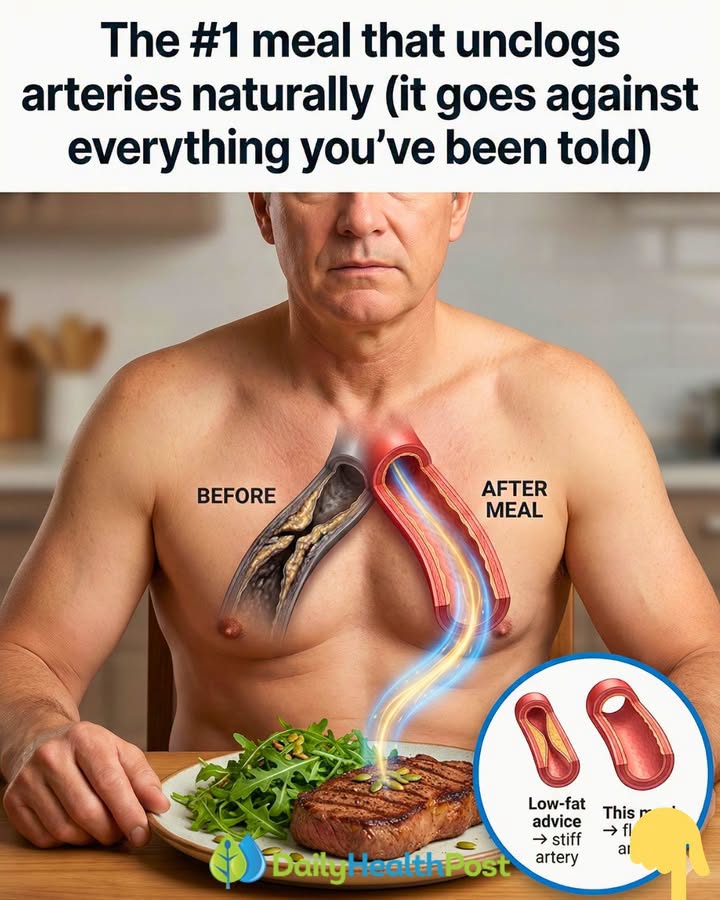
Have you ever wondered what the absolute best meal is to help clean out your arteries? We often hear about all the things we shouldn’t eat, but today, let’s flip the script and talk about what you should be eating to keep your heart happy and your arteries clear. It might surprise you, as it goes against a lot of common advice out there.
This article will explore the science behind arterial health, focusing on the crucial endothelial layer and the role of key nutrients like nitric oxide, magnesium, and Vitamin D. We’ll also clear up some common misunderstandings about “heart-healthy” foods and reveal the surprising components of the ultimate artery-cleansing meal. Get ready to learn how to naturally support your cardiovascular system with delicious and effective food choices.
Advertisement
💡Understanding Your Arteries: The Endothelial Layer
To figure out what to eat for healthy arteries, we need to look at the inside lining of these important blood vessels. This lining is called the endothelial layer, and it’s super important for your overall health. Think of it as the control center for your blood flow.
This layer does a lot of jobs:
Controls blood pressure: It helps manage whether your blood pressure is high or low, keeping it in a healthy range.
Acts as a filter: Especially in places like your kidneys, where blood vessels filter out waste, the endothelial layer plays a big part.
Prevents clots: It helps make sure your blood flows smoothly without forming dangerous clots.
Supports your immune system: It also has a role in keeping your body’s defenses strong.
One interesting thing about this layer is that it prefers glucose as its main fuel. Now, you don’t have to eat sugar to get this glucose; your body can easily make it. But here’s the catch: this layer also needs insulin to use that glucose. This means the inside of your arteries is very sensitive to problems with insulin. Many people have something called insulin resistance, which happens when you eat too many carbohydrates and snack all the time. If you have insulin resistance, your arteries might not be getting the fuel they need, even if there’s glucose around.